Montessori at home: a simple setup and 25 activities (no special toys)
How to bring Montessori into your home with low shelves, real tools and everyday jobs. Twenty-five practical life and hands-on activities, including ideas for 2 year olds.
 By Mrs Mac
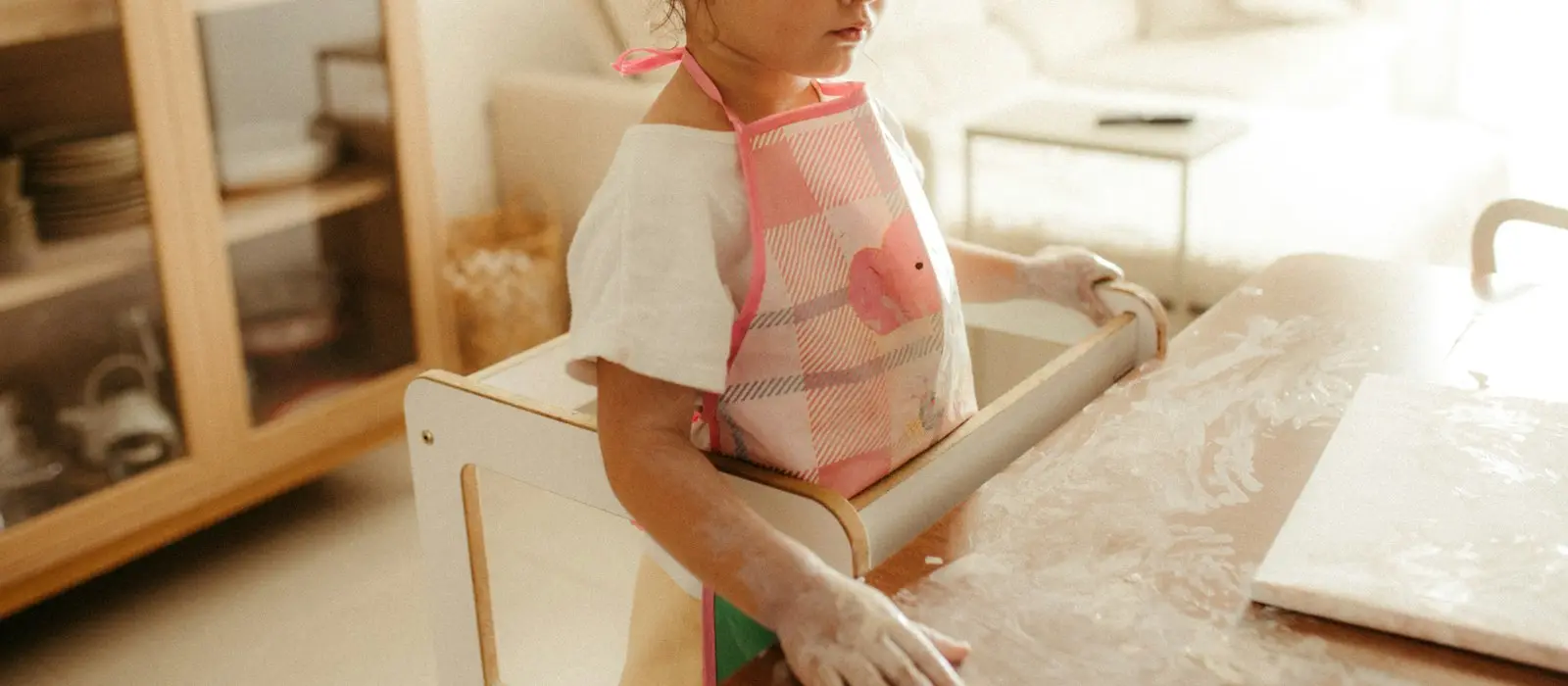
Montessori at home isn't about buying wooden toys or turning your living room into a classroom. It's a way of setting things up so your child can do more for themselves, and then stepping back so they can.
Most of it costs nothing. A low shelf, a small jug, a stool at the counter and a few real jobs will get you most of the way there.
What Montessori means (in one minute)
Maria Montessori was an Italian doctor who opened her first school, the Casa dei Bambini ("Children's House"), in Rome over a century ago. She noticed that young children concentrate deeply when they're given real, purposeful work at their own size, and the freedom to choose it.
At home, that comes down to a few ideas:
- Independence. Set things up so your child can do it themselves.
- Real work. Children want to do what you do: pour, wipe, cut, sweep.
- Choice within limits. Offer a few good options, not a whole toy box.
- Observation. Watch what your child is drawn to, then adjust.
- Respect for concentration. If they're absorbed, don't interrupt.
How to set up your home
You don't need to redo every room. Start with one spot.
- Low, open shelves. Put a few activities at your child's eye level, each on its own tray or in its own basket.
- Fewer toys, rotated. Six to eight things out at once is plenty. Store the rest and swap a few each week.
- A place for everything. When each thing has a home, your child can find it and put it back.
- Real, child-sized tools. A small jug, a little broom, a cloth for spills, a butter knife.
- A step stool in the kitchen so they can see and help at the counter.
- Hooks and baskets at their height for coats, shoes and bags.
How to show an activity
This is the Montessori trick that makes the biggest difference.
- Show it slowly, with few words. Let your hands do the talking. Pour slowly so they can see how.
- Do it the same way each time. Children learn from repetition.
- Hand it over. "Now it's your turn."
- Step back. Resist fixing, helping or praising every pour. Let them try, spill and try again.
- Show them how to clean up. A small cloth and a spill is part of the activity, not a failure.
Practical life: kitchen
"Practical life" is the Montessori name for everyday tasks. They build coordination, concentration and confidence, and children love them because they're real.
- Pouring water. A small jug and a cup on a tray. Start with dry rice or beans if water is too much.
- Washing fruit and vegetables. A bowl of water, a brush and some potatoes or apples.
- Peeling a banana or a clementine. Start the peel for them, then let them finish.
- Cutting soft food. A butter knife or a child-safe crinkle cutter for banana, cucumber or soft cheese. Stay close.
- Spreading. Butter or cream cheese on crackers or toast.
- Setting the table. Draw around a plate, cup and fork on a placemat so they know where things go.
- Making a snack. Let them choose and serve their own snack from two or three options.
Practical life: care of self and home
- Dressing practice. Big buttons, zippers and Velcro on an old cardigan or coat.
- Hanging up their coat on a hook they can reach.
- Washing hands at a sink with a stool and their own towel.
- Watering plants with a small watering can.
- Wiping the table with a damp cloth after meals.
- Sweeping with a small broom and dustpan. Tape a square on the floor to sweep into.
- Folding washcloths, napkins or socks.
- Matching socks from the laundry basket.
- Washing a doll or toy cars in a tub of soapy water.
Hands-on activities for the shelf
These are the kinds of activities you'd find on a Montessori shelf, made with things you already have.
- Spooning. Two bowls, a spoon and dried beans or pasta. Move them from one bowl to the other.
- Tongs transfer. Move pompoms or cotton balls between bowls with kitchen tongs.
- Threading. Big beads or cut-up straws on a shoelace or pipe cleaner.
- Sorting. A muffin tin and a handful of buttons, pasta shapes or colored blocks.
- Opening and closing. A basket of clean jars, boxes and containers with lids.
- Lock and key. A small padlock and its key.
- Matching. Pairs of identical objects, or objects and their photos.
- Feely bag. Put a few familiar objects in a bag. Can they guess by touch?
- Nature tray. Pinecones, shells, stones and leaves to sort, line up and talk about. Pair it with leaf rubbing.
Montessori activities for 2 year olds
Two-year-olds want to do everything themselves, which makes this the perfect age for Montessori at home. Keep activities short and simple, and choose things with one clear step.
- Pouring dry rice from a small jug into a bowl
- Wiping up spills with their own cloth
- Putting shoes on a low rack by the door
- Washing vegetables in a bowl of water
- Spooning pompoms from one bowl to another
- Posting coins or craft sticks into a slot cut in a box lid
- Sorting two colors of blocks into two bowls
- Opening and closing lidded containers
- Watering one plant each morning
- Helping put toys back in their baskets at the end of the day
Children this age still put things in their mouths, so skip small objects like beads, beans and coins unless you're right beside them. For more ideas at this age, see activities for 2 year olds.
Montessori activities for 3 to 6 year olds
As they grow, make the jobs longer and give them more of the steps.
- Making a simple recipe. Fruit salad, a sandwich or pancake batter, from start to clean-up.
- Pouring their own drink from a small jug at mealtimes.
- Using real tools. A peeler, a grater (with supervision) or a hammer and nails in soft wood.
- Caring for a pet or plant every day.
- Packing their own bag for a day out.
- Writing a shopping list (with drawings) and finding the items at the store.
For more play-based ideas at this age, see preschool activities.
What the research says
Most Montessori research looks at schools, not homes. But it's a useful guide to what the approach can do when it's done well.
At home, the parts you can borrow are the ones that cost nothing: real jobs, a calm space, time to concentrate and a parent who steps back.
Tips for Montessori at home
- Start with one shelf and one job. You can add more later.
- Slow down. Things will take longer. Build in the time.
- Expect spills. Keep a cloth nearby and make wiping part of the work.
- Praise effort, not results. "You poured that so carefully" beats "Good job!"
- Don't interrupt concentration. If they're absorbed, let them be.
- Rotate when interest fades. If something sits untouched for a week, swap it out.
What to say
Watch my hands. ... Now it's your turn.
If it stalls
If they don't want to try, do the activity yourself nearby and let them watch. If they get frustrated, make it easier: a smaller jug, bigger beans, fewer steps. If they use it "wrong" (pouring beans on the floor), calmly show it again, and if it keeps happening, put it away and try another day.
Common questions
Do I need Montessori toys? No. Montessori is about how you set up and step back, not what you buy. Kitchen tools, baskets and household objects work just as well.
At what age can I start Montessori at home? From birth, with simple things like a low mirror, a floor bed or a mat for movement. Practical life jobs usually start to click from around 18 months.
Is it okay to mix Montessori with other kinds of play? Yes. Pretend play, messy play, rough-and-tumble and stories all matter too. Many families borrow Montessori ideas for the kitchen and daily routines and play freely the rest of the time.
How is Montessori different from Reggio Emilia? Montessori focuses on independence, order and carefully designed activities. Reggio Emilia is more about open-ended projects, art and following children's questions. See our guide to the Reggio Emilia approach at home.
What if my home is small? One low shelf, one hook and one stool are enough. Montessori is about access, not space.
More ideas
Looking for more hands-on play? Try sensory play, activities for 3 year olds, science activities for preschoolers and our big list of things to do with kids.
Sources
About the author
Mrs Mac, Chief Play Officer
Mrs Mac is a current Early Years lead with over ten years of experience. She checks every Otter idea for timings, mess and attention spans, so it works on a wet Tuesday, not just on paper. Meet our Chief Play Officer.