Salt dough recipe: easy ornaments and handprints kids can make
A simple three-ingredient salt dough recipe, how to bake or air-dry it without cracks, how to paint and seal it, and ideas for ornaments and handprint keepsakes.
 By Mrs Mac
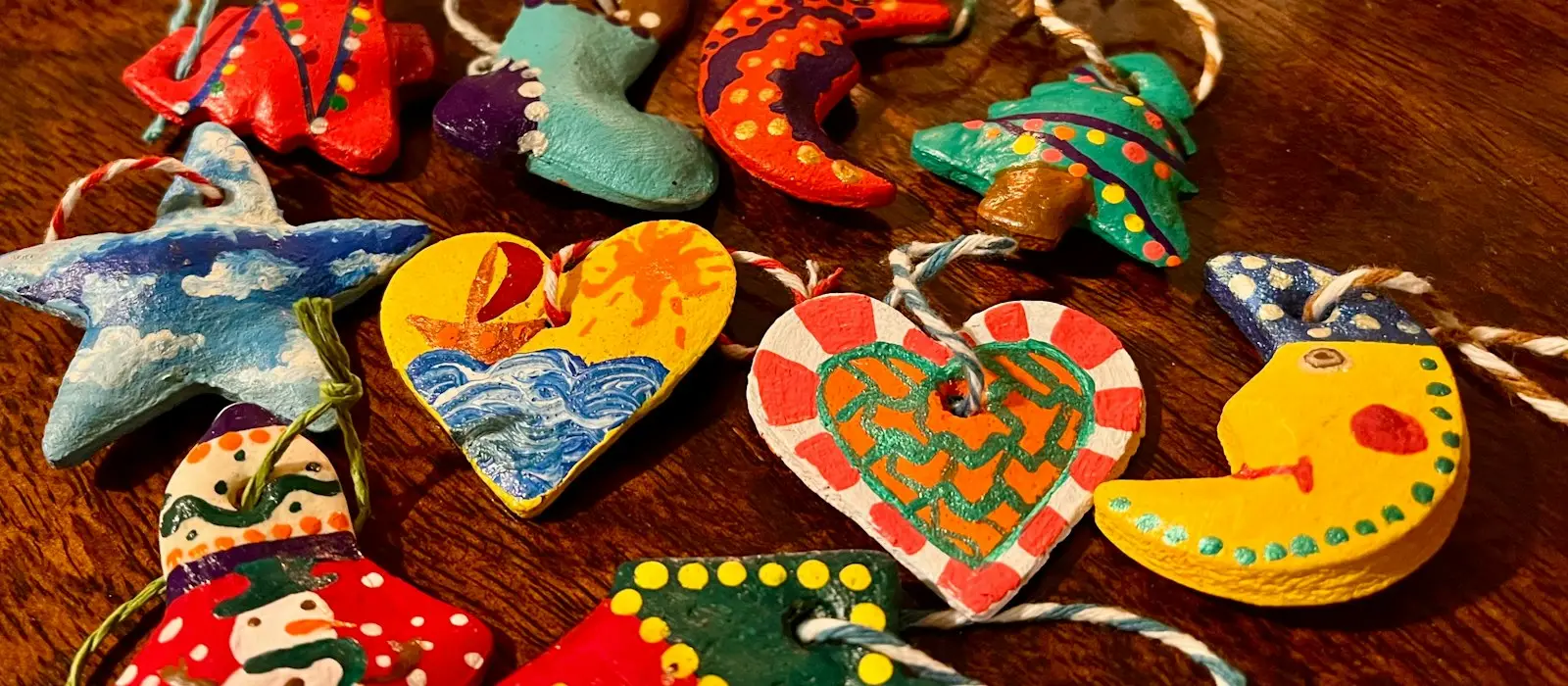
Salt dough is the simplest way to make something your child can keep. It's three ingredients, it's easy to shape, and once it's baked and painted it lasts for years. That makes it perfect for handprints, holiday ornaments and gifts for grandparents.
Salt dough recipe
Makes: about 15 to 20 small ornaments · Time: 15 minutes to make, 2 to 3 hours to bake
Ingredients
- 2 cups all-purpose flour (heat-treated if you can find it)
- 1 cup table salt
- 3/4 to 1 cup water
Method
- Mix the flour and salt in a large bowl.
- Add the water gradually, stirring, until it comes together into a dough. You may not need all of it.
- Knead for 5 minutes on a floured surface until smooth and firm. If it's sticky, add a little flour. If it's crumbly, add a few drops of water.
- Roll it out about 1/4 inch (6 mm) thick. Thinner pieces dry faster and crack less.
- Cut shapes with cookie cutters, or press in handprints and footprints.
- Make a hole for hanging with a straw before baking.
How to bake salt dough
- Heat the oven to 250°F (120°C). Low and slow is the secret.
- Put the shapes on a baking sheet lined with parchment paper.
- Bake for 2 to 3 hours, turning them over halfway, until hard all the way through. Thicker pieces take longer.
- Let them cool completely on the tray.
To air-dry instead, leave the shapes on a rack in a warm, dry place for 2 to 3 days, turning them once a day.
How to stop salt dough from cracking or puffing
- Bake at a low temperature. Too hot and they puff up and crack.
- Roll it evenly. Pieces of the same thickness dry at the same rate.
- Don't make it too wet. Extra water means more cracking.
- Use fine table salt, not coarse salt.
- Let it cool slowly in the oven with the door open if you've had trouble with cracks.
How to paint and seal salt dough
- Paint with acrylic or poster paint once completely cool and dry.
- Add details with markers, glitter or glued-on sequins.
- Seal with a coat of clear varnish, Mod Podge or clear nail polish (an adult job). This protects it from moisture, which can make it soft again.
Salt dough ideas
- Handprint or footprint keepsake. Press your child's hand into a circle of dough. Write the year on the back before baking.
- Christmas ornaments. Stars, trees, hearts and gingerbread people with a ribbon loop.
- Name ornaments. Press letter stamps or write their initial with a toothpick.
- Leaf prints. Press a leaf into the dough and peel it off to leave the veins. Pair with leaf rubbing.
- Fossils. Press toy dinosaurs or shells into the dough.
- Gift tags. Small shapes with a hole, painted and tied onto presents.
- Beads. Roll small balls, push a straw through, bake and thread onto string.
- Pretend food. Make cookies, pizzas and fruit for a play kitchen.
- Mini bowls. Shape a small pinch pot for treasures.
- Magnets. Glue a small magnet on the back of a painted shape.
Safety
- It's not food. Salt dough has a very high salt content. Don't let children eat it, raw or baked.
- Raw flour. The FDA advises against letting children use raw dough for crafts. If you make salt dough, choose heat-treated flour if you can, supervise closely, don't let them taste it, and wash hands well afterwards.
- Keep it away from pets. Hang ornaments high and out of reach of dogs.
What to say
Let's make a handprint, so we can see how big your hand was this year. Spread your fingers wide... and press!
If it stalls
If the dough is too sticky to work with, knead in more flour. If your child loses interest after cutting a few shapes, let them stop, and save the painting for another day. Painting baked salt dough is often their favorite part.
Common questions
What age is salt dough for? Children from about 3 can help mix and cut shapes with close supervision. Handprints work at any age, as long as an adult does the pressing.
How long does salt dough last? Baked, painted and sealed salt dough can last for many years if it's kept dry. Unbaked dough keeps for a few days wrapped in plastic in the fridge.
Can I microwave salt dough? You can, in short bursts, but it often puffs and cracks. Baking low and slow gives the best results.
What's the difference between salt dough and playdough? Salt dough is for making things to keep: it hardens when baked. Playdough is for playing: it stays soft. See our playdough recipe.
More ideas
For more making, see paper plate masks, craft activities for 5 year olds and fine motor activities.
Sources
About the author
Mrs Mac, Chief Play Officer
Mrs Mac is a current Early Years lead with over ten years of experience. She checks every Otter idea for timings, mess and attention spans, so it works on a wet Tuesday, not just on paper. Meet our Chief Play Officer.